
Reading time 6 min
Best restroom trailers for high-traffic locations
At Ace Luxury Rentals, we keep clean restrooms with optimum comfort in mind.
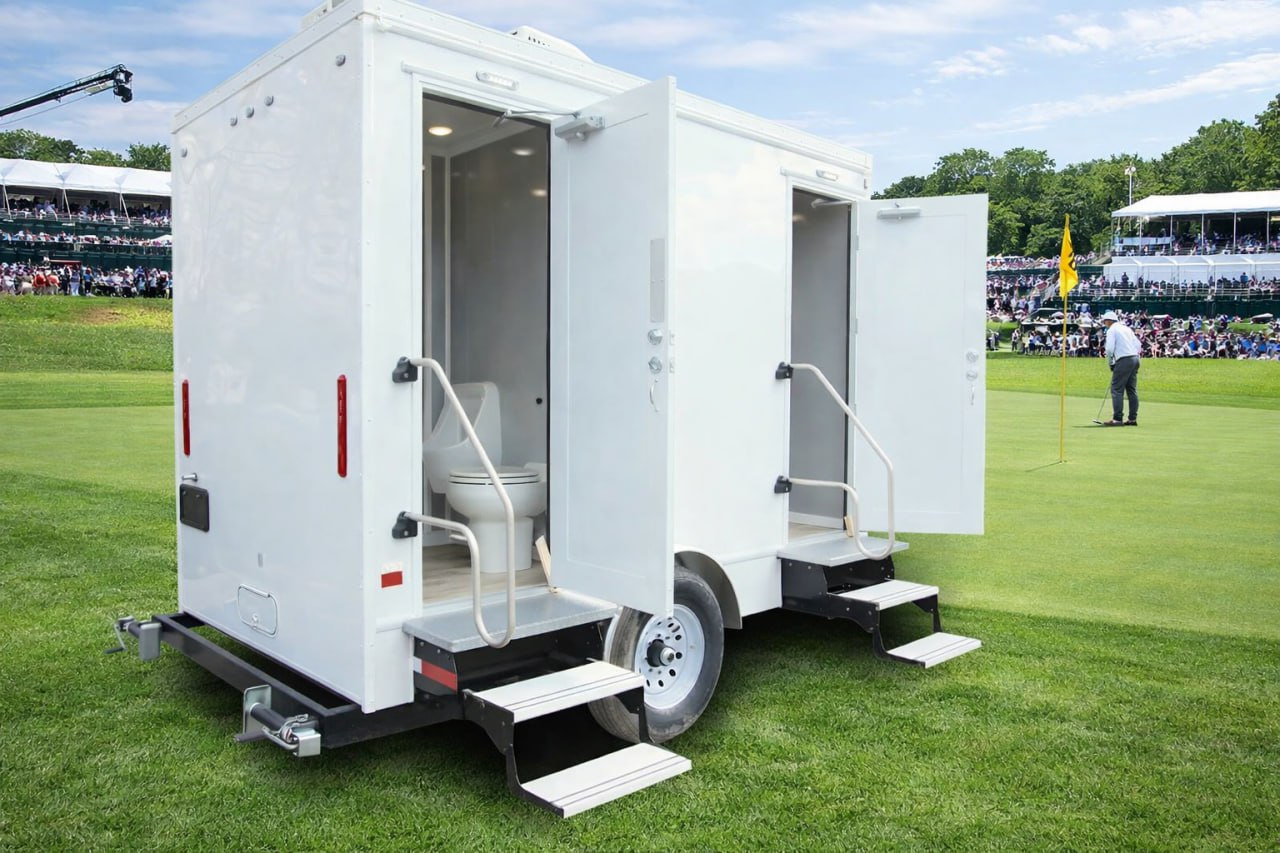
When a large number of persons need to access the facility in a small space, portable restrooms quickly start showing their shortcomings. They get congested, and the amenities run out. To counter this, we use restrooms designed for a high traffic flow. At Ace Luxury Rentals, we keep clean restrooms with optimum comfort in mind, so each individual can access proper restroom facilities, regardless of how big the event may be.
What makes a restroom trailer suitable for high-traffic locations?
Frequent use shows where design must be firm. Heavy footfall drives faster depletion of consumables and accelerates wear. High-traffic restroom trailers built for cadence and resilience respond with higher throughput, tougher materials, and waste systems sized to match demand. The practical goal is continuous operation with minimal interruption.
Throughput provides a clear measure of performance. A two-stall trailer typically accommodates up to 150 guests for a four- to six-hour event. An eleven-stall unit can accommodate 600 to 1,000 attendees. For all-day events, estimate about 50 to 75 per stall. Event planners often consider one restroom station per 50 to 75 guests for events that span four to six hours. That rule of thumb expands when either alcohol is served or the event extends longer
Durability is just as important as capacity. Aluminum or steel frames resist corrosion and withstand years of heavy usage. Interiors rely on stainless steel, heavy-duty fiberglass, and water-resistant, non-slip flooring to handle the unending parade of traffic. Wood construction is avoided by many operators who wish to avoid rot and structural failure. High-density vinyl or Composite FRP panels are very common for walls and ceilings due to their resistance to water and ease of cleaning.
Waste disposal is a pearl of great price. Luxury trailers normally have a waste tank ranging between 300 to 500 gallons. Larger self-contained trailers will even go beyond 1,000 gallons of capacity, to about 3,800 liters. Second trailer configurations that are installed for a two-stall trailer usually have a 300-gallon tank that provides between 1,200 to 1,300 flushes. Initially before use, the tank is filled with about 10% of its capability in clean water together with odor-controlling packets to help in the biological process.Trailers generally have a distinct separation for the males' and females' areas in the interior. This trailer has ample space for movement in the hallways.
Key features to look for in high-traffic restroom trailers
Capacity, hygiene, durability, comfort, and utilities converge in practical ways. Optimally selected restroom trailer features for busy locations directly impact how long a self-contained unit can operate between services, how easy it is to keep clean, and how guests perceive the level of organization of the event.
Capacity and layout deserve attention early. Trailers range from two-stall units for smaller gatherings to ten-stall configurations that handle 500 to 1,150 visitors. Typical arrangements mix individual stalls with urinals and distinct sections for men and women. ADA-compliant units are available with wider doors and gentle ramps to accommodate mobility needs.
Hygiene-related elements are apparent in terms of functionality. Flush toilets made from porcelain and featuring running water are common in many units. This is coupled with soap and paper towel dispensers. Touch-and-go faucets minimize interaction. High efficiency in waste management and ventilation contributes to maintaining a neutral environment despite heavy utilization. Chemical additives in holding tanks contribute to odor management and decomposition.
Durability is reflected in the finer points. Stainless steel finishes, anti-slip flooring, solid-surface countertops, and vandal-resistant parts contribute to durability. Materials selected to withstand repeated cleaning will minimize downtime and reduce maintenance expenses.
Comfort matters to perceptions. Wherever the weather, heating and air-conditioning systems ensure that the interior remains usable. Lighting, either interior or exterior, with LEDs, makes for increased safety and sight. Then there are added luxuries like large mirrors, decent sound systems, interior designs, and hot water heaters that take the experience beyond comfort into pleasant zones.
Power and water are what hold things together. Trailers must be supplied with 110V or 220V electric power. Depending upon whether there is available municipal water or not, self-contained trailers must be refilled and drained to keep clean water supplies in the fresh water tanks. Pressurized water systems are established to supply adequate water pressure to all fixtures.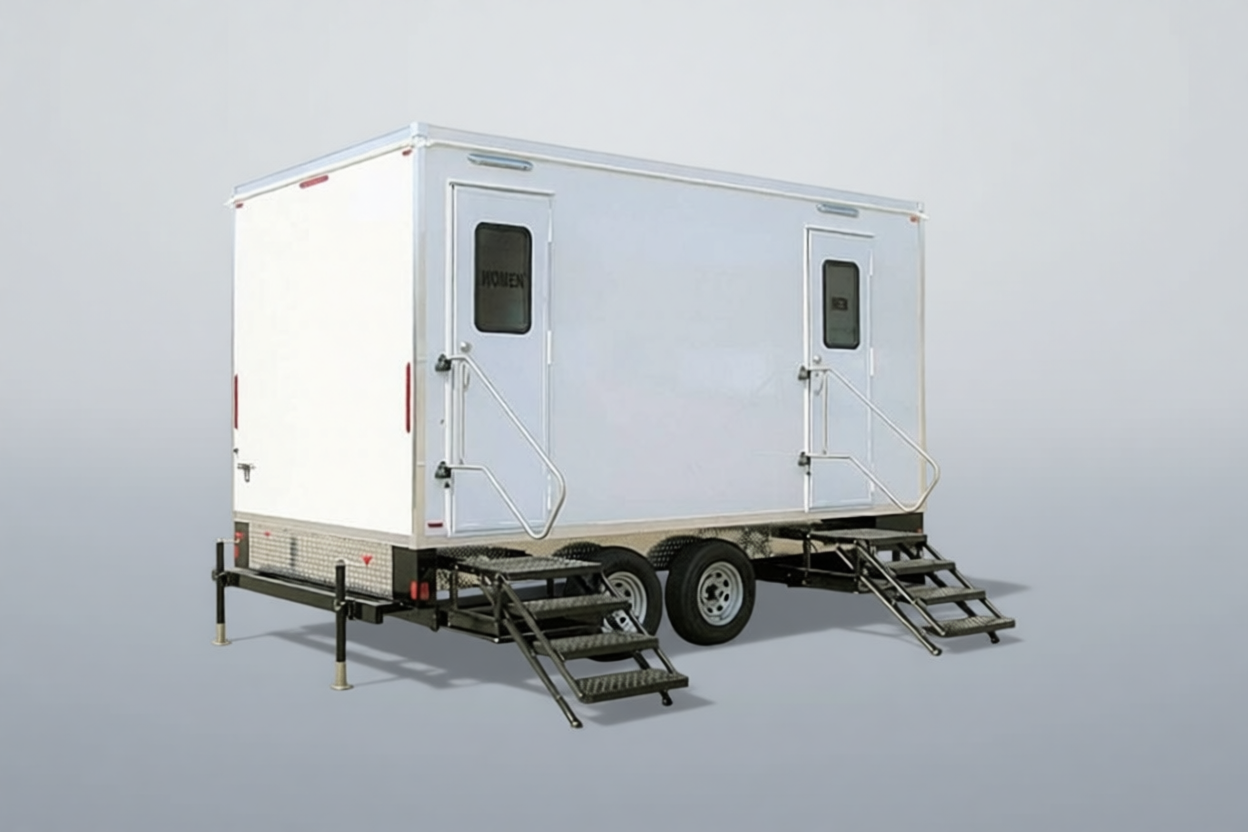
Types of restroom trailers for busy sites
Common unit types vary by their high capacity and specific purpose, so matching a trailer to usage patterns is important:
- Standard multi-stall trailers configured in arrangements such as 2+2, 3+2, or 4+4 to serve general high-volume needs.
- Luxury and VIP multi-stall trailers finished with materials like granite and decorative flooring for weddings, corporate events, and galas. Our luxury portable toilet rentals provide premium comfort for any upscale gathering.
- ADA-compliant trailers with wider doors, low-slope ramps, and grab bars to meet accessibility requirements.
- Combined shower and restroom trailers providing both shower stalls and toilets for multi-day events or work camps.
- Specialized units including urinal-only trailers and self-contained options for remote locations.
Flush systems differ and affect operational rhythm. The best portable restroom trailers often utilize vacuum-flush systems, which use less water per flush and conserve resources. Gravity-flush systems are simpler and more common in standard models because they are reliable and easier to maintain.
Restroom trailers for events and crowds
Anticipating peaks for large crowds simplifies planning. A four- to six-hour festival often uses the one-per-50-to-75 guideline. Demographics and alcohol service increase demand. Female-heavy guest lists tend to require more stalls. Longer events or those with beverage service require additional units or more frequent servicing.
Different event types push different priorities. Selecting durable restroom trailers for festivals and concerts requires a focus on rugged units that handle frequent servicing. Sporting events generate short bursts of intense use, so rapid turnover is essential. Weddings and corporate affairs favor aesthetics and consistent performance, which is why portable restroom rentals for private events are the standard for high-end hospitality. A two-stall trailer can be acceptable for up to 75 guests while three- to five-stall units suit 150 to 300 attendees. In emergency response settings, speed and durability matter most, with self-contained units that work off-grid.
Placement has a significant effect on performance, and units should be in sight and located near high-traffic points of interest such as food stands and stages. In events lasting more than a day or in events featuring beverages, frequent service points per day help in preventing an overflow of the tanks and ensures a clean environment.
Restroom trailers for construction and work sites
On a jobsite, restrooms are a basic labor need and a morale factor. Trailers for these applications are built to be tough and designed for easy maintenance. Heavy-duty flooring, rigid frames, and vandal-resistant fixtures are standard. Regular upkeep helps units withstand muddy boots, heavy use, and outdoor exposure.
Legal compliance shapes planning. OSHA guidance suggests one restroom unit for every ten workers during a 40-hour workweek. On large-scale projects, high capacity restroom trailers ensure that the common rule of thumb — one toilet per 20 employees during a 10-hour shift — is met without logistical strain. Meeting those standards protects worker health and helps avoid citations.
Self-contained trailers, carrying fresh water and waste tanks, are particularly convenient for projects outside of populated areas. Other site trailers with larger capacities often integrate restroom space with small offices or break areas that prove helpful on busy jobsites.
Given the nature of construction sites, they are always in search of certain features that are practical. Heating provides the comfort needed when the weather is cold. Strong steps and handrails ensure safety when entering and leaving. Non-slip floors cut down on accidents that occur in conditions involving mud or water. Exterior lighting facilitates visibility during early starts and late finishes.
Local waste management companies usually handle pump-outs and water replenishment so trailers remain functional across the life of the project.
Tips for managing high-traffic restroom trailers
Experience shows effective management reduces surprises. Begin with a realistic capacity assessment when deploying restroom trailers for large crowds and place units where people naturally congregate. Level ground and easy access for delivery vehicles matter. Check power and water access early.
Maintenance cycles should be Demand-driven. Greater use will mean frequent pump-outs and hourly checks for cleanliness in peak periods. Weekly maintenance may be enough in a usual site setting but it is important to be flexible as patterns of presence and conditions alter.
Stock up on consumables. Having a quick depletion of toilet paper, soap, or paper towel supply affects a guest’s first impression. Ensuring proper charging of waste tanks with 10% fresh water and deodorizing packets will help to reduce any smells and ensure a smooth decomposition process. All waste processes have to work according to local health standards.
Presence of attendants on site helps a lot in handling big or extended events. They refill products, undertake basic cleanup, and fix small issues before becoming a complaint. Availability of clear signs, trash cans near entries, proper lighting, and air fresheners can make a big difference in improving the usability aspect. Ensure ADA units with clear labeling and accessibility.
Expect the typical hiccups, such as blocked plumbing, power or water outages, or unexpected spikes in usage. Have the service or support numbers readily available to get problems quickly settled. Adherence to health regulations or handicapped access enables these facilities to maintain health levels while avoiding penalties.

