
Reading time 5 min
Best restroom trailers for sports venues
It is necessary to take rest room considerations seriously, and it makes everyone feel safer and friendlier to everyone at sports games.
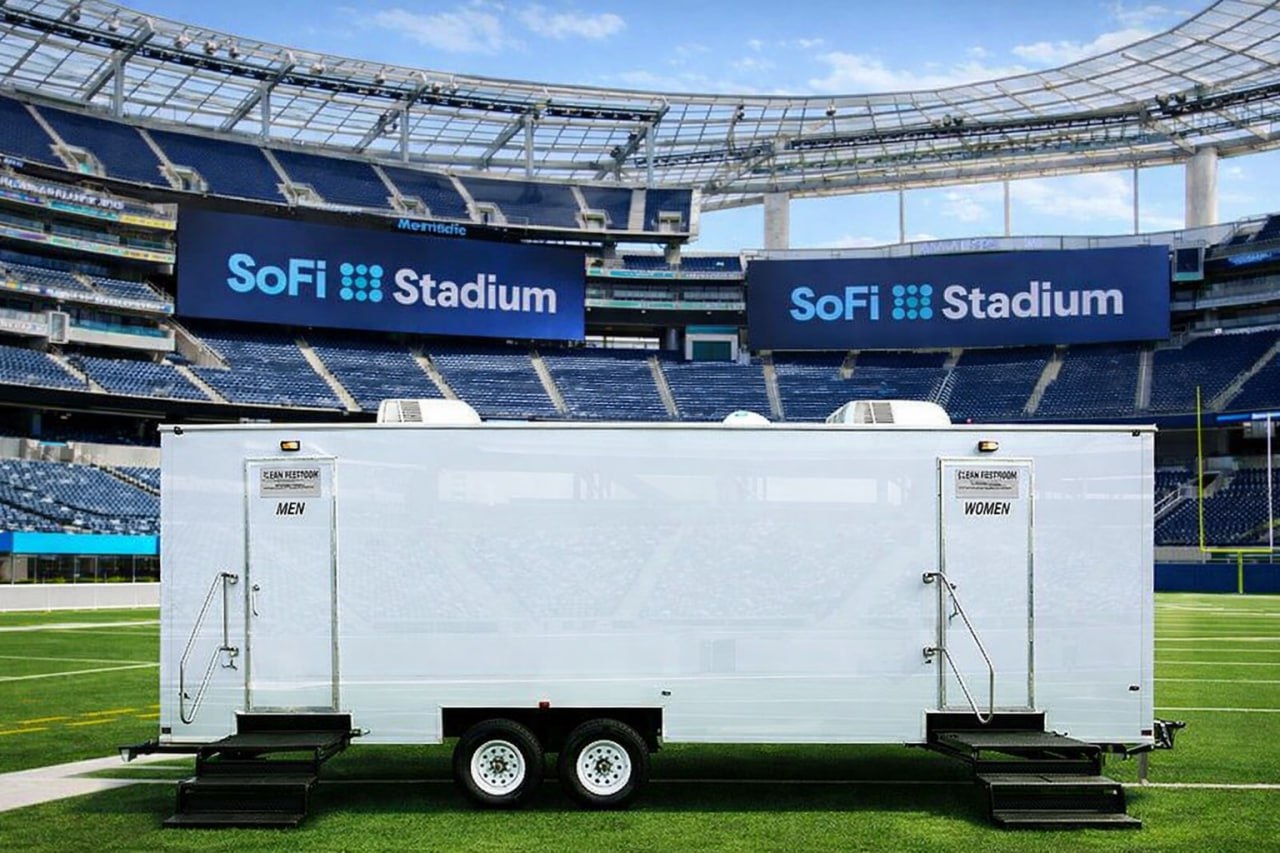
Guests tend to remember events for small, specific moments. Clean, well-run restroom trailers for sports venues are one of those moments guests remember. Excellent sanitation conditions make a smooth impact in determining sports comfort and health in different scales of sports events. Poor sanitation makes everyone grumpy, and perception of the arena could be at stake and ticket and food sales could be negatively impacted. It is necessary to take rest room considerations seriously, and it makes everyone feel safer and friendlier to everyone at sports games.
Why Top-Tier Restrooms Are Non-Negotiable for Sports
Negative restroom experiences have measurable costs. Research shows nearly half of baseball fans become less likely to return after a poor restroom visit. Over 40 percent said they likely would reduce their spending at concession stands when the facilities are poor. Long lines are also an issue; 53 percent of respondents complained of waits and 26 percent of respondents said that basic supplies were absent. According to TRAX Analytics, rest room problems are often basic reasons why consumers do not return to facilities.
Clean, well-placed restrooms help operations. When facilities are tidy and positioned to avoid choke points, crowd movement improves. Complaints against employees remain low and they can satisfactorily serve customers. People tend to hang around the food stands and sport stands longer. This builds a good name for the event. There also lies a health issue on the other side of the coin. Good health hygiene discourages the multiplication of microorganisms. Municipal health regulations and OSHA specify proper health and cleanliness in mobile toilets. The city of Austin recommends one restroom unit per 50 people for special events as a practical guideline, though requirements often fluctuate based on the gender mix of the expected audience.
Accessibility belongs in the initial plan. Federal ADA rules require public event facilities to be usable by people with disabilities. A helpful benchmark is that at least 5 percent of single-stall portable restrooms should meet ADA standards. Those units typically provide a 60x60 inch floor area, wider doors with a minimum 32-inch clear opening, level entries or ramps, grab bars and toilet seat heights in the 17 – 19 inch range.
Luxury amenities change perceptions in plain ways. Utilizing professional sports venue restroom trailers equipped with flushable toilets, running hot-and-cold water, climate control, and higher-end finishes produces an experience closer to permanent indoor restrooms. Guests notice a roomy mirror, reliable heating on a cool evening or a touchless faucet during a crowded halftime. Attention to these details signals care and reflects well on promoters and venues.
A Guide to Restroom Trailer Sizes & Configurations
Portable restroom trailers for sports events sit between basic porta-potties and permanent facilities. Compact multi-stall models work for short events or VIP areas. Larger, luxury configurations bring plumbing, climate control and upscale interiors for longer or higher-end experiences. Choose a style that matches the crowd and the event duration and you change how people experience line waits and intermissions.
Typical guest capacities for common trailer sizes at an eight-hour event are roughly as follows:
- Two-stall trailers typically accommodate 100–175 guests.
- Three-stall trailers typically accommodate 150–225 guests.
- Four-stall trailers typically accommodate 200–350 guests.
- Five-stall trailers typically accommodate 250–399 guests.
- Six-stall trailers typically accommodate 350–450 guests.
- Eight-stall trailers typically accommodate 400–650 guests.
- Ten-stall trailers typically accommodate 500–1150 guests.
These are baseline numbers. Sizes and configurations will vary depending on the manufacturer. Smaller versions of the two- and three-stall trailers are more compact and may be suitable for satellite facilities or VIP sections. The six-to-ten stall trailers will range from 20 to 30 feet in length and are more suitable for larger volumes. Luxury trailers introduce variables that will affect the guest experience. Porcelain toilets that flush, sinks that have actual running water and the ability to have warm water or even scalding water, solid-surfaced countertops, LED lighting, PA systems, and changing areas will all affect the guest experience.
Specialized setups depend on accessibility or event requirements. The ADA-compliant trailers consist of a wheelchair turn space, low sinks, wheelchair ramps, and grab bars. In some trailers, there may be a segregated area for males and females, and changing and showering booths for extended events.
Calculating How Many Restrooms You Need
Headcount and event duration drive unit counts. Alcohol and food service increase use rates. Many planners add 15 to 20 percent more facilities when drinks are available and some increase capacity up to 50 percent in high-consumption scenarios. Demographics change usage rates. A higher proportion of female attendees typically raises average time per visit. Peak periods such as halftime, intermissions or scheduled breaks concentrate demand and require special attention, especially when managing a stadium restroom trailer rental.
The Portable Sanitation Association International has some helpful guidelines along these lines. For events lasting under four hours, absent alcohol, one restroom per 50-75 attendees is a good target. For events lasting between four and eight hours, one restroom per 50 attendees is a sound guideline. For events longer than that, one per 40 attendees. These accommodations increase if alcohol will be served. Guidelines under the Americans with Disabilities Act require at least one accessible unit per 20 standard units, or at least one accessible unit.
Real-life examples help in understanding ratios. For instance, for a party of 100 people lasting four hours where no drinking will occur, it would call for roughly two units. For a party of 250 people lasting six hours involving light drinking, it would call for three to four units. For huge festivals lasting all day long and involving 2,000 people, it would call for 20 to 40 restrooms depending on bar sales and/or the number of food vendors.
Location matters as much as numbers of restrooms to install. Restroom placement sites need to be located in paths of pedestrian traffic near exits and entrances and near the food vendors and community centers and not far from the bus drop-off points. Visible signs help locate the sites sooner rather than later. Dead-end sites to avoid as well as sites with hills and restrooms located next to the concession stand line.
Hand-washing capacity and power requirements are frequent afterthoughts. A useful rule of thumb is at least one hand-washing station for every four toilets, especially where food is served. Luxury trailers often require secure and dedicated electrical hookups or a reliable generator supply. Early power planning prevents last-minute complications.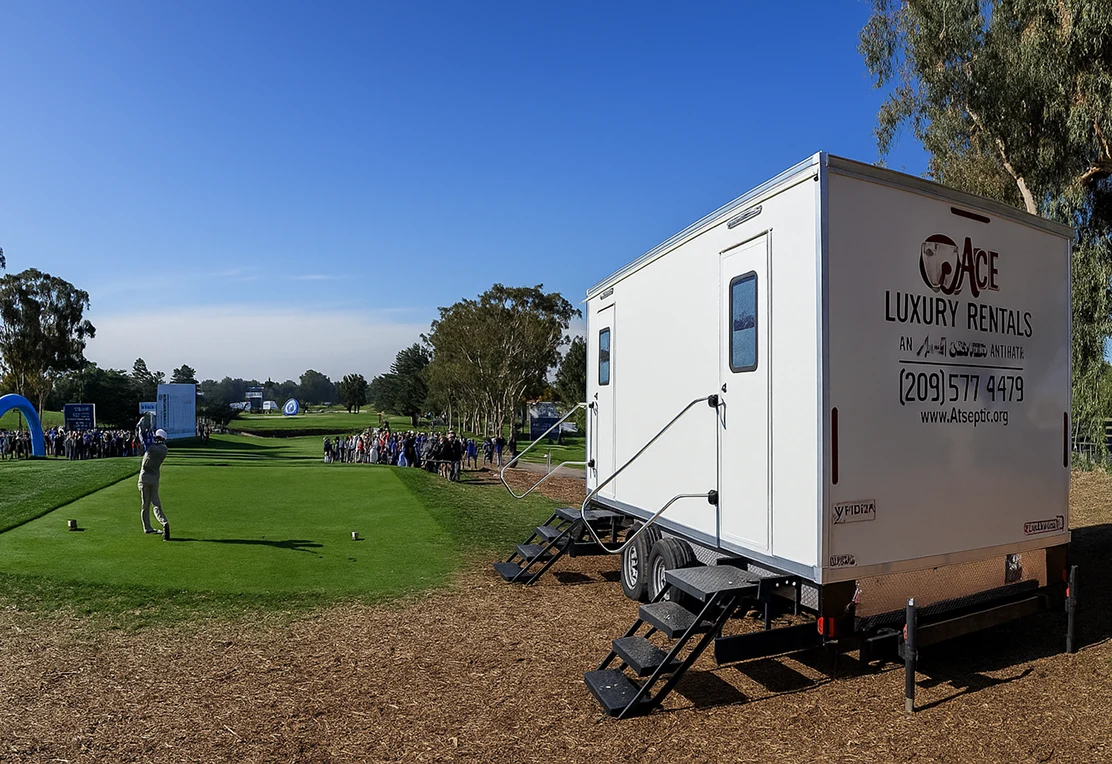
Case Studies: Restroom Strategies from the Field
Large events illustrate how scale changes choices. The Boston Marathon deploys roughly 1,400 portable toilets for 30,000 runners and spectators. Organizers started with a base estimate of one portable toilet per 100 people and modified that ratio along the course. Densities at the start and bus drop-off points are intentional. More than 700 units are stationed near the start in Hopkinton, and pockets pop up along the course and at the finish. Accessibility is baked in, with about 50 accessible restrooms scattered throughout, and cleaning rotations keep the units ready for runners and spectators.
Modern stadiums are taking a distributed approach. For example, Allegiant Stadium boasts close to 300 restroom locations with approximately 1,430 toilets and urinals in total. Designers often exceed code-driven sink-to-guest ratios because throughput and short lines are the goals. Venues also tend to favor more, smaller restrooms across concourses instead of a few large facilities. The result is fewer bottlenecks and fans closer to their seats.
Technology enhances response times. Many event venues have incorporated smart restroom monitoring to ensure supply levels and cleanliness. Solutions such as the Kolo Smart Monitoring System, offered by Georgia-Pacific, allow for real-time supply and usage tracking. Custodians can focus on repairs rather than random checks. Many venues such as Globe Life Field, PPG Paints Arena, and Chase Center have integrated smart restroom systems. Concessions and venue sentiment are related to minimizing wait times, empty supply, and customer satisfaction.
Existing facilities often employ particular methods in order to enhance restroom productivity. High-capacity dispensers minimize refill needs and, therefore, ensure adequate supplies, particularly in periods of maximum usage. Touchless features, such as sensor-controlled faucets and automatic flushing, contribute to improved restroom cleanliness. Dedicated cleaning staff and monitoring during peak hours address problems early. Overflow plans that include supplementary portable units cover unexpected attendance surges. For instance, the deployment of restroom trailers for college sports facilities provides a scalable solution to maintain high service standards during high-attendance rivalry games or campus-wide events.
Why Choose Ace Luxury Rentals for Your Event
We supply luxury restroom trailers that lift guest expectations and reduce the operational burden of sports event logistics restrooms. Our trailers offer dependable plumbing, climate control, ample interior space, and high-quality finishes for an easier, more respectful restroom experience. Delivery, installation, and strike are on schedule and include cleaning and resupply services, so facilities remain presentable from opening till closing. Sizing, location, and power needs are recommended for assistance in preventing late-game surprises. Our specially-equipped, ADA-accessible units come with ramps, large doors, and the right grab bars for visitors with disabilities.
A thoughtfully maintained restroom program pays for itself through happier guests, smoother operations and fewer interruptions to your core focus on the event. When the portable restroom rental is right, everything else runs more quietly.

