
Reading time 7 min
Wedding Restroom Trailers
Wedding planning is the art of handling a thousand overt decisions and a hundred covert ones.
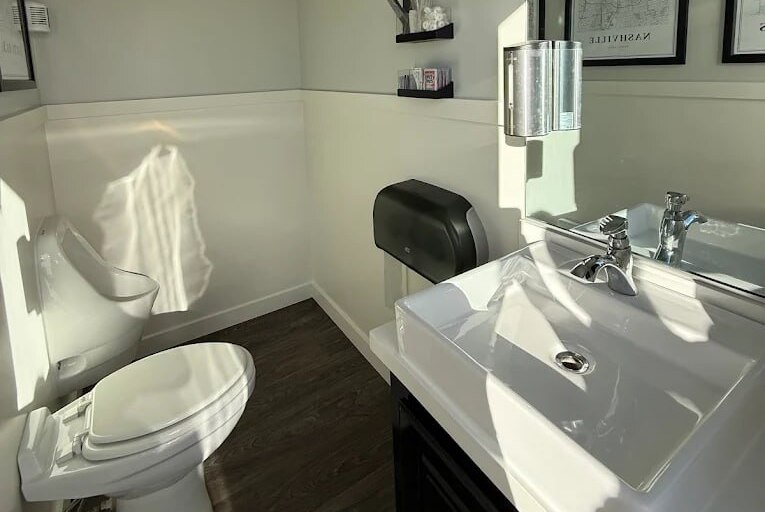
Wedding planning is the art of handling a thousand overt decisions and a hundred covert ones. Between the fitting of the wedding dress and the dinner seating arrangement, the restrooms play an important role in the convenience of the attendees. However, should this aspect be pushed to the background, the whole event is jeopardized. This is not the case with a modern restroom trailer since it creates an aspect of comfort that the other units are unable to provide.
Types of wedding portable toilets
Portable restroom rentals can range from functional to luxurious. These categories address varied needs, such as budget, guests, and the ambience of the occasion. Being knowledgeable on the differences will help you identify a portable restroom best suited for your wedding.
Standard portable toilets, often called porta-potties, are the basic offering. They are single-stall, non-flushing fixtures usually fitted with a hand sanitizer dispenser. They work well for remote or very informal gatherings, such as a casual outdoor wedding. Their appearance and function sit far from what many couples want at a wedding, and placing them where guests will mingle can undercut the mood you’re aiming for.
Basic wedding porta potty trailers step up from those utilitarian roots. Expect flushing toilets, sinks with running water, and private stalls. They suit backyard ceremonies or rustic receptions where reliable hygiene matters more than high-end finishes. Comfort increases noticeably, and the trailers are easier to integrate into event logistics.
Luxury wedding restroom trailers blend with a refined celebration. Such trailers usually consist of flushing porcelain toilets, hot and cold running-water sinks, and climate-control systems, including air conditioning during hot portions of the day and heating during cooler parts of the evening. Interior decor can include wood-pattern flooring, solid surface countertops, vanity mirrors, interior and exterior lighting, and, as an option, sound systems. Toiletries are usually included and of high quality. They vary in capacity, ranging from 2 stations for private parties to 5 stations or 10 station trailers for large functions. They are available in styles that are either rustic or modern, ensuring that your trailers don't upstage your decor.
ADA-compliant restroom trailers are essential when accessibility is a concern. These units have wider doors, ramps, open interiors for maneuvering, and safety equipment such as grab bars. Their presence signals thoughtful planning and makes the day comfortable for elderly guests, people with mobility needs, and families with small children. Some providers also offer shower trailers or dedicated handwashing stations for extended celebrations.
How many restroom trailers do you need for your wedding?
"Lines are often the result of underestimating bathroom facility planning. There are numerous variables that need to be considered and weighed in order to strike the right combination between avoiding congestion and avoiding an above-target cost."
“Guest count” is the major variable. A general rule of thumb is to provide one restroom stall for every 50 to 75 guests for a normal 4 to 6-hour event. Some industry recommendations recommend providing one restroom for every 25 guests if alcohol will be served, which is an indicator that usage will be more frequent. For weddings under 100 guests, a wedding toilet trailer with 2 to 3 stalls is often sufficient. For 100 to 200 guests, plan for 3 to 5 restrooms. Events in the 200 to 250 range commonly need at least four units. For celebrations above 200 guests, aim for 6 to 8 restrooms, and very large affairs of 300 or more may require closer to 10 units to keep wait times reasonable.
The time span of the event will impact usage. The longer the celebration, the greater the visits. In case the occasion exceeds four hours, it will be helpful to increase capacity by a further 10 to 20 percent. An easy method is to increase one unit for each two hours.
The increase in restroom visits due to alcohol consumption can be estimated as 30 to 40 percent. Under these conditions, you would want to add one restroom for every 100 guests beyond what you already calculated.
The gender ratio should not be overlooked. Women will, on average, travel to and from restrooms more often and spend more time in them. For venues that are more male- or female-dominant in guests, adjust accordingly. Layout will also push your hand in certain directions. For ceremonies, cocktail receptions, and receptions in separate areas, multiple trailer sites will help cut distances and keep lines moving.
Guest demographics and vendor needs deserve attention. Elderly attendees, families with small children, and guests with mobility challenges mean ADA-compliant units should be included. Vendors who stay on-site for hours will use facilities more often than a single guest. Include them in your headcount. Holding tank capacities matter. Know the fresh-water and waste-tank sizes so the wedding portable restroom trailers can cover the planned duration. For example, a 250 to 300 gallon fresh-water tank can roughly serve 275 to 340 guests at a 6-hour event. Multi-day or long celebrations may require scheduled mid-event servicing.
Where to set up your wedding restroom trailer
A professional wedding restroom trailer service ensures that placement is a balance between practicality and presentation. A poor location complicates delivery, raises safety concerns, and can stick out visually. A smart spot makes the trailers feel like one more thoughtful detail.
Site requirements start with an even surface, like asphalt, gravel, and grass strong enough for the weight of the trailer. Avoid sloping land and irregular surfaces. Length and width for trailer placement are approximately 20-30 feet in length and 10 in width. Sufficient height clearance of 12 feet allows for trailer installation and servicing.
Access for delivery is important. Delivery and pickup require a clearance width of about 10 to 12 feet and a driveway able to handle a three-quarter-ton truck, with a turning radius in excess of 60 feet. In cases with locked gates or restricted access, arrangements may be necessary to prevent delays.
Full-featured luxury units require power. Most trailers require one or more dedicated 120V/20-amp circuits within 50-100 feet for climate control, lighting, sound, and flushing systems. Larger formats may require 30-amp or 50-amp service or multiple 20-amp circuits. These outlets should not be shared with heavy event equipment such as catering appliances. Where shore power is not available, a quiet generator appropriately sized or trailers with onboard power systems can be used.
Water supply is equally important. The preferred hookup is a standard 3/4-inch garden hose spigot within 50 to 100 feet delivering roughly 30 to 60 PSI. In remote locations, such as a beach or forest clearing, trailers with onboard fresh-water tanks and pump systems work but require monitoring and refilling. As noted earlier, a 250 to 300 gallon tank might serve 275 to 340 guests over a 6-hour event, which helps frame how often on-site refills will be needed.
Waste disposal planning keeps things hygienic. All of the trailers have waste holding tanks and can be serviced mid-event if the schedule or tank sizes require it. For multi-day events, regular waste pumping along with fresh-water replenishment is required.
Aesthetics count. Place trailers out of central sightlines whenever possible, and use landscaping or simple screens to integrate them. Avoid central congregation areas unless the unit's appearance complements your décor. Clear signage and well-lit pathways help after dark. Mark hidden obstacles such as sprinkler heads, septic systems or buried irrigation lines before the truck arrives to avoid damage. For winter events consider a winterization package that keeps water lines insulated, supplies heated elements and uses freeze-proof spigots while requiring constant electrical hook-up
Why choose Ace Luxury Rentals for your special day
We treat portable restroom rental as part of the event design rather than mere equipment rental. Our fleet of luxury restroom trailers for weddings includes 2-station, 3-station, and 5-station units, all maintained to high standards. Guests notice features such as climate control, porcelain flushing toilets, hot and cold sinks, hardwood-style floors, vanity mirrors, and carefully chosen lighting. ADA-compliant options are available so accessibility is never an afterthought.
Service matters as much as the units. Our team handles punctual delivery, careful setup, and efficient removal. Technicians know how to work within the constraints of busy venues, from urban spaces to a remote vineyard. Cleanliness and hygiene are core commitments. We perform pre-event inspections, offer on-site maintenance if desired, and keep supplies restocked. Clients have access to round-the-clock support should an issue arise.
Guest experience informs our decisions. Ample interior space, individual stalls, controlled temperature, and high-quality restroom amenities enhance the appeal. Couples seeking a personal touch can expect us to offer scent diffusers or arrange simplistic flower details to ensure restroom space is in line with wedding decor. Experience informs reliability. Many weddings have utilized our services, and positive feedback has been forthcoming from wedding organizers and couples appreciative of the difference that attention to detail makes.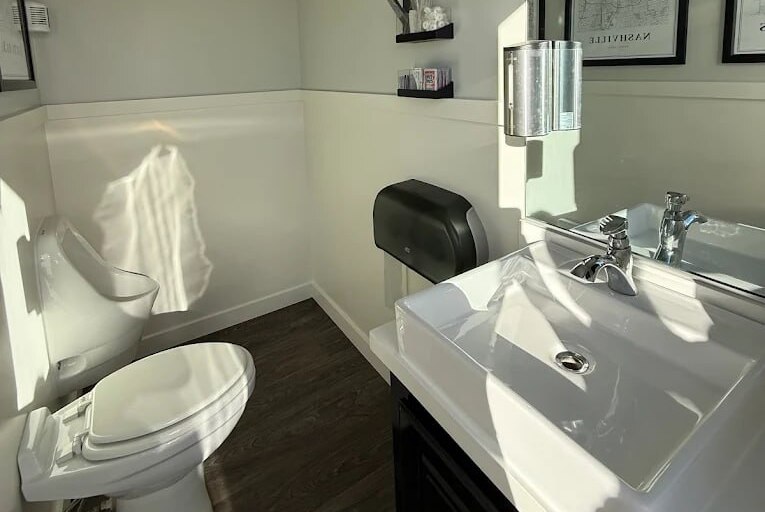
Wedding restroom trailer rental cost
Pricing varies with type, size, duration, location, and extras. A basic wedding restroom trailer rental offering flushing toilets and running water commonly runs $1,000 to $1,500 per day. Luxury models with higher-end finishes, climate control, and additional amenities typically fall between $1,500 and $4,500 or more per day. As examples, a 2-station luxury unit might be $1,799 to $2,499 per day, while a 4-stall unit could be in the $1,700 to $2,200 range. ADA-compliant units, because of their specialized layout and larger footprint, can carry a premium.
Rental duration changes the math. Single-day bookings tend to result in higher day-to-day rates. Weekend or multi-day rentals lower the average daily cost. Long-term rentals, like 28-day bookings, can result in deep per-day discounts. Large configurations for extended periods sometimes start from about $2,999 to $6,999.
Location and delivery play a part in the total. The further the distance from the depot, and for remote sites or challenging access, the more the transportation fees are. Some vendors have per-mile fees outside of a certain radius; for instance, $2.99 to $3.99 per mile if the venue is more than 25 miles away. Peak season weekends during spring and summer tend to have higher rates as demand goes up. Generally, booking 6 to 12 months in advance ensures better selection and pricing. Last-minute requests could incur rush fees.
Extras count, and they have value. If shore power is not an option, a silent generator package may be an additional expense. Attendants to maintain cleaning and restocking at the site throughout an event are an optional service that may vary from $100 to $700 per extra. Mid-event cleaning and waste removal for multi-day shows are often additional features. Luxuries such as high-end toiletries, custom signs, flower arrangements, and winterization options are additional. These extra costs can be avoided by receiving a detailed contract beforehand.
To provide ballpark figures, some basic luxury restroom trailers (2 to 4 stations) may be priced in the $200 to $400 per day neighborhood. Mid-range units might run $400 to $700 per day. High-end trailers often start at $700 to $1,200 or more per day. Overall, the total wedding bathroom rental cost typically falls between $1,000 and $5,000 depending on selections, with higher totals for large or multi-day celebrations.

